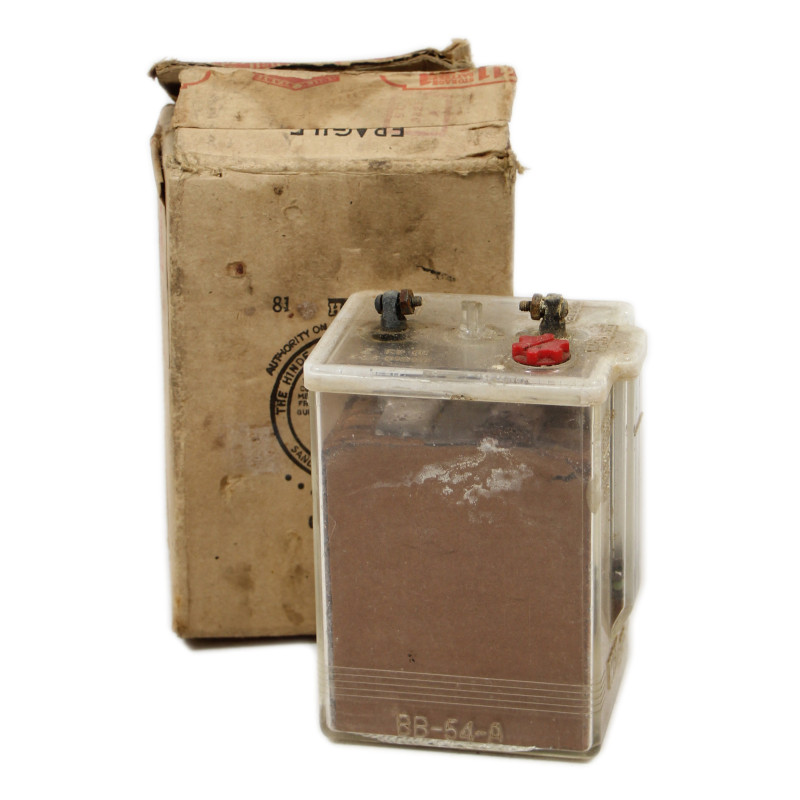
Very scarce genuine WWII US BB-54-A battery to power the AN/PPN-1 beacon transmitter receiver.
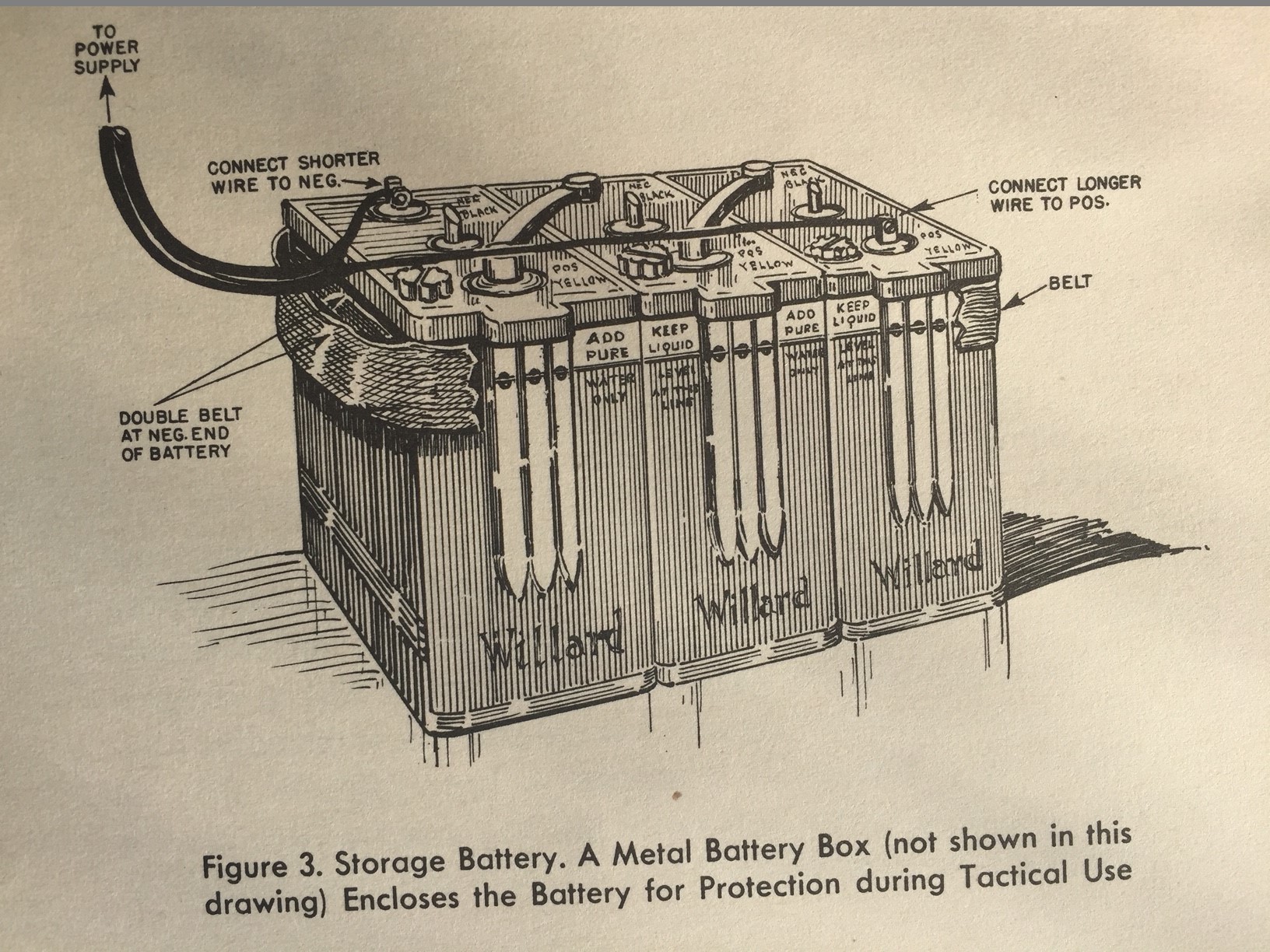
3 of this battery was needed for the beacon transmitter receiver.
Excellent condition, dated October 1943 with its genuine cardboard box.
Description
The Rebecca/Eureka transponding radar was a short-range radio navigation system used for the dropping of American and British airborne forces and/or their supplies. It consisted of two parts, the airborne transmitter and its antenna system (REBECCA), and the ground-based transponder (EUREKA). REBECCA calculated the range to the EUREKA based on the timing of the return signals, and its relative position using a highly directional antenna. The "REBECCA" name comes from the phrase "Recognition of beacons". The "EUREKA" name comes from the Greek word meaning "I have found it!".
This system was developed in 1940 in the UK at the Telecommunications Research Establishment by R. Hanbury-Brown and J.W.S. Pringle.
This type of beacon was particularly used throughout the Second World War by American and British pathfinders to mark drop zones. Only the AN/PPN-1 beacon was used during WWII, and is undoubtedly one of the rarest items to be found.
The historical artifacts for sale at PARATROOPER’s are intended for collectors, history enthusiasts, historians and museum curators. These items do not glorify or promote any of the political, ideological or racial opinions related to the global conflicts that bathed the 20th century in blood.
Besides, we remind you that Article R.645-1 of the French Penal Code establishes fines applicable to fifth class contraventions (except in the specific cases of a filming, show or exhibition which refer to historical events) for any individual who wears a uniform, insignia or symbol reminiscent of those worn by members of the various organizations declared criminal in application of Article 9 of the Charter of the International Military Tribunal annexed to the London Agreement of August 8, 1945 – SS, SD, Gestapo, Nazi leaders (the Führer, the Reichsleitung, the Gauleiters and their main collaborators, the Ortsgruppenleiter, the Zellenleiter and the Blockleiter), or reminiscent of those worn by any person found guilty, by a French or International Jurisdiction, of one or several crimes against humanity established by Articles 211-1 to 212-3 or mentioned in Law No. 64-1326 of December 26, 1964.
The Code provides additional penalties, including the confiscation of the items used or intended for committing the offence.