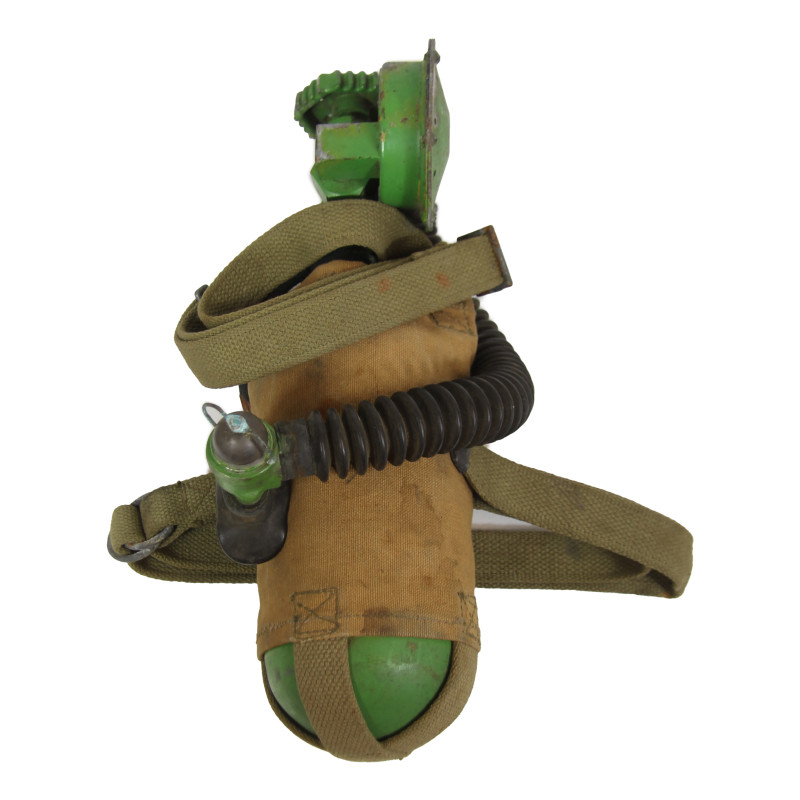
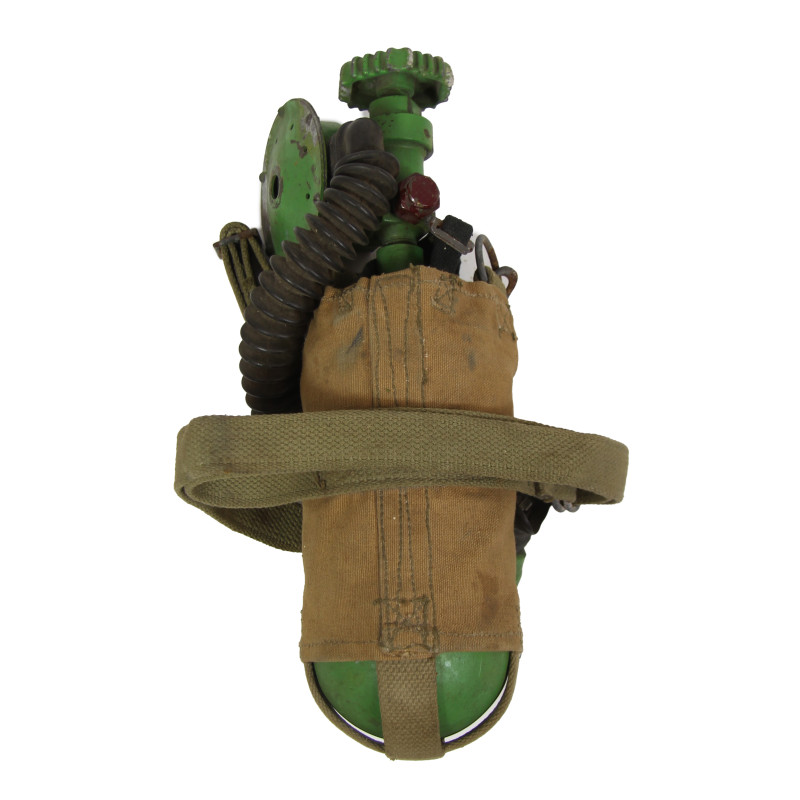
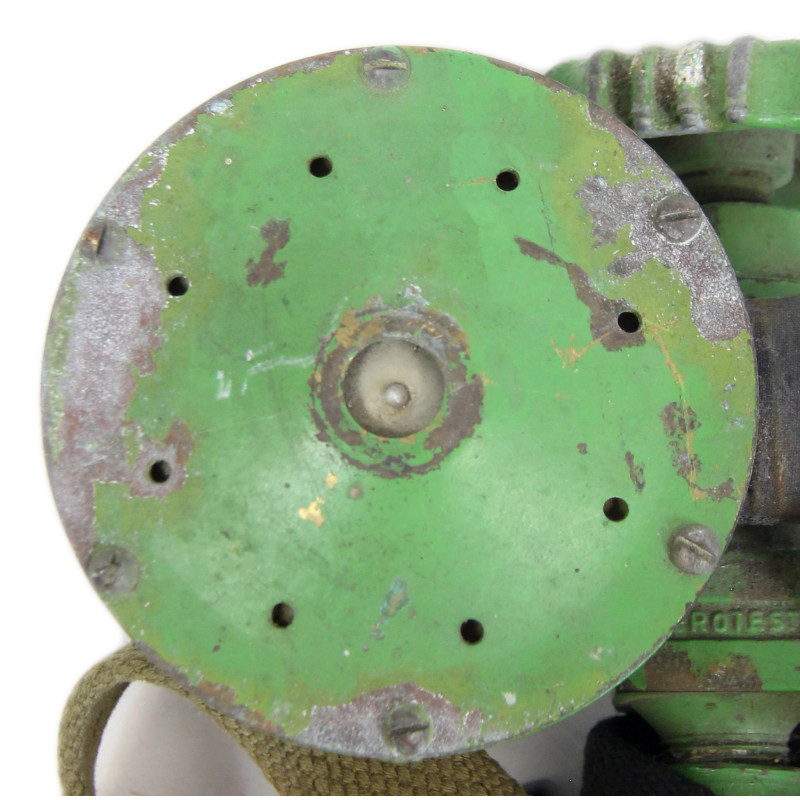
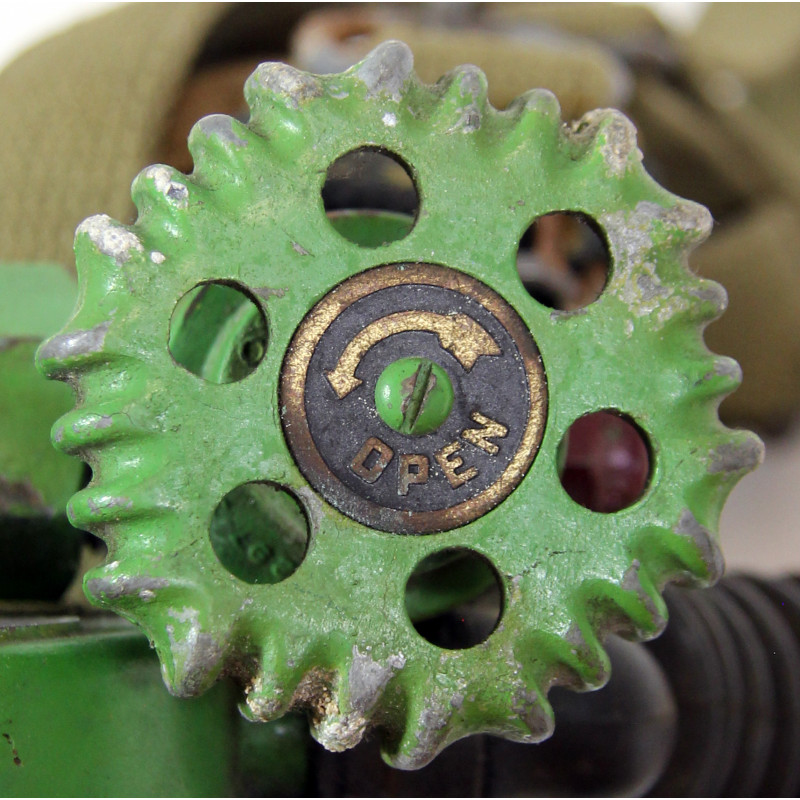
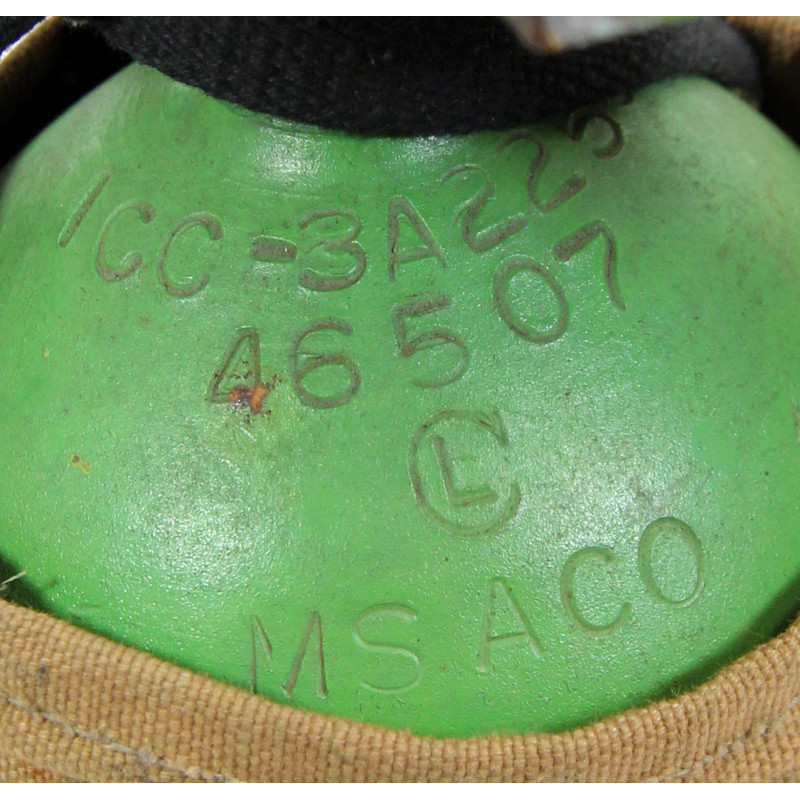
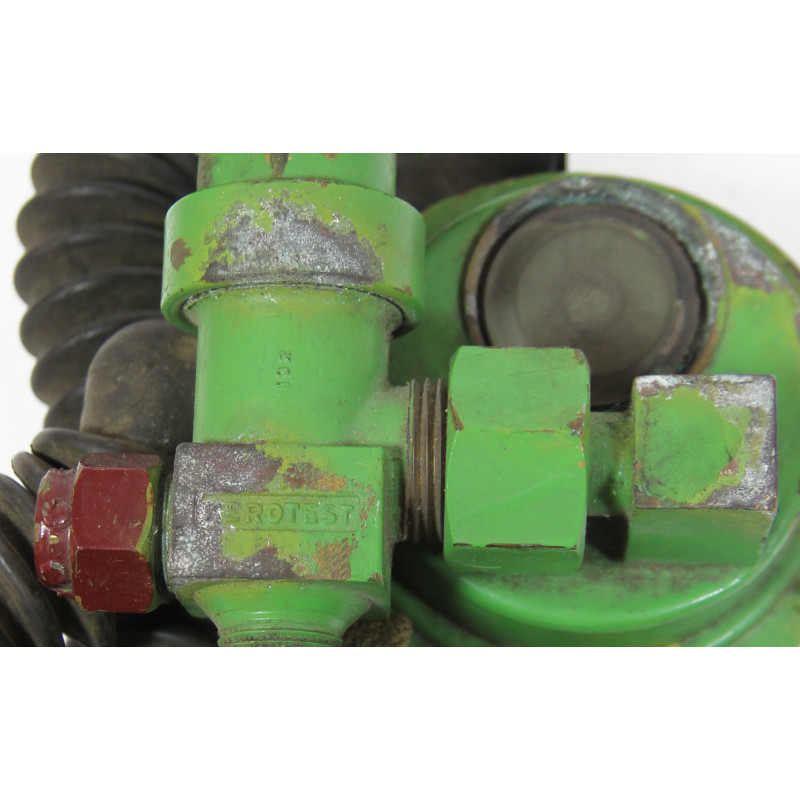
U.S. Submerged Escape Apparatus. Extremely rare original WWII U.S. Army emergency breathing device, designed for crews of Duplex Drive Sherman tanks and intended for use during evacuation at sea. This compact respirator system was developed in preparation for D-Day, the first operational employment of DD tanks by U.S. forces, and was intended to enable crew members to escape from a submerged tank operating with a snorkel system.
Issued to tank crews in the event their vehicle became swamped, the Submerged Escape Apparatus provided a means of underwater escape. Earlier British equipment, notably the Amphibious Tank Escape Apparatus (ATEA), proved too bulky for effective use, as it could not be easily passed through tank hatches. It was therefore replaced by a more compact and practical U.S. system, the Submerged Escape Apparatus, which was subsequently adopted for operational use.
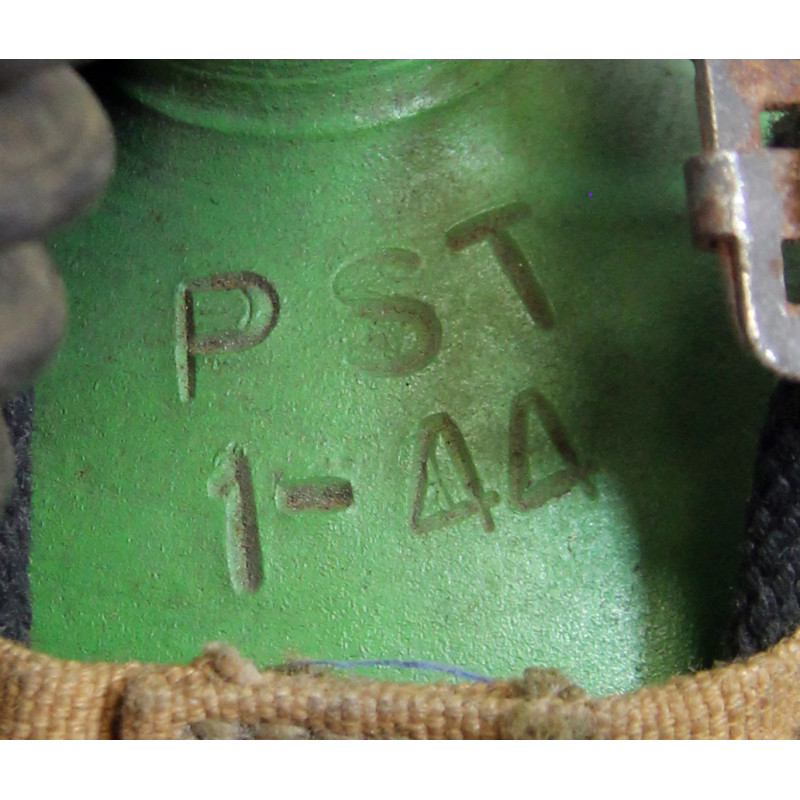
Dated January 1944.
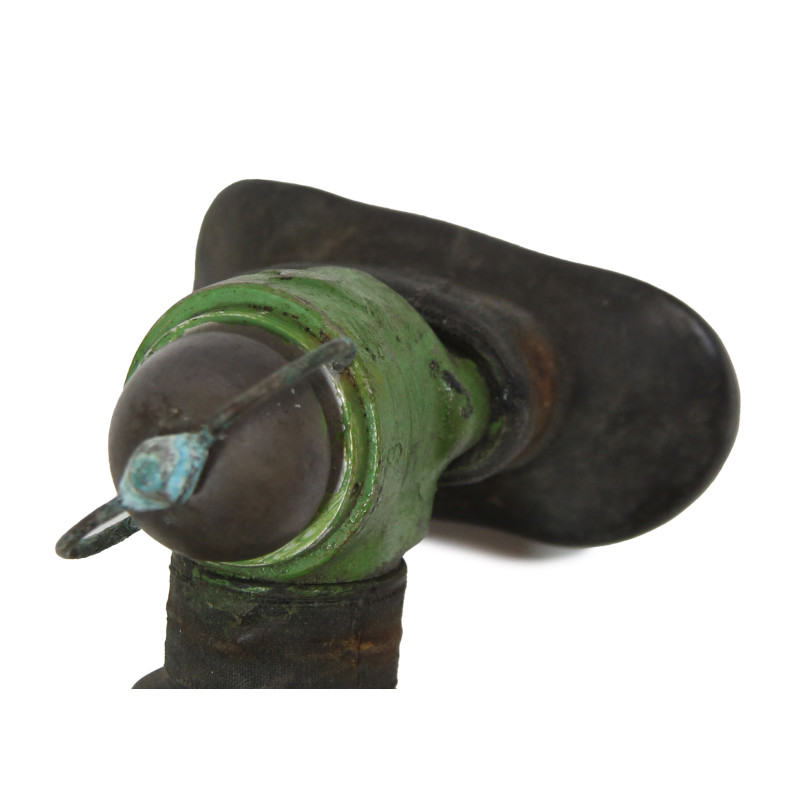
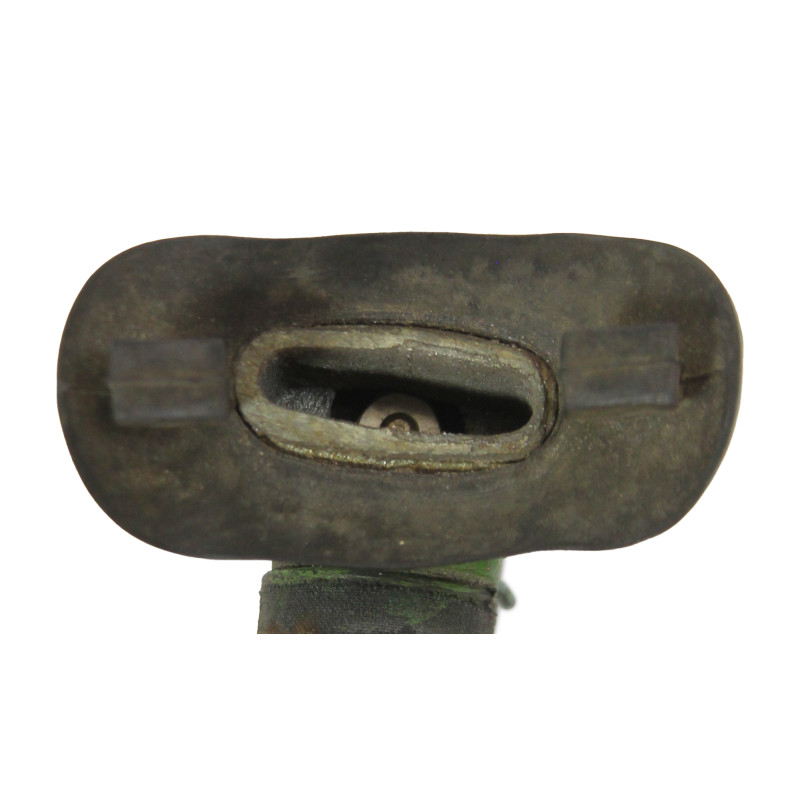
Good overall condition; retains its original creased hose and mouthpiece; comes in its canvas cover, complete with strap -- snap hook is in working order.
Total height: 13.2in.
Product Details
ANC58461-Wa325
Please enter at least one character for your customization
Your customization has been saved
check_circle
check_circle
The historical artifacts for sale at PARATROOPER’s are intended for collectors, history enthusiasts, historians and museum curators. These items do not glorify or promote any of the political, ideological or racial opinions related to the global conflicts that bathed the 20th century in blood.
Besides, we remind you that Article R.645-1 of the French Penal Code establishes fines applicable to fifth class contraventions (except in the specific cases of a filming, show or exhibition which refer to historical events) for any individual who wears a uniform, insignia or symbol reminiscent of those worn by members of the various organizations declared criminal in application of Article 9 of the Charter of the International Military Tribunal annexed to the London Agreement of August 8, 1945 – SS, SD, Gestapo, Nazi leaders (the Führer, the Reichsleitung, the Gauleiters and their main collaborators, the Ortsgruppenleiter, the Zellenleiter and the Blockleiter), or reminiscent of those worn by any person found guilty, by a French or International Jurisdiction, of one or several crimes against humanity established by Articles 211-1 to 212-3 or mentioned in Law No. 64-1326 of December 26, 1964.
The Code provides additional penalties, including the confiscation of the items used or intended for committing the offence.